
-
How Toppers Take Notes: 10 Secret Strategies You Can Start Using Today
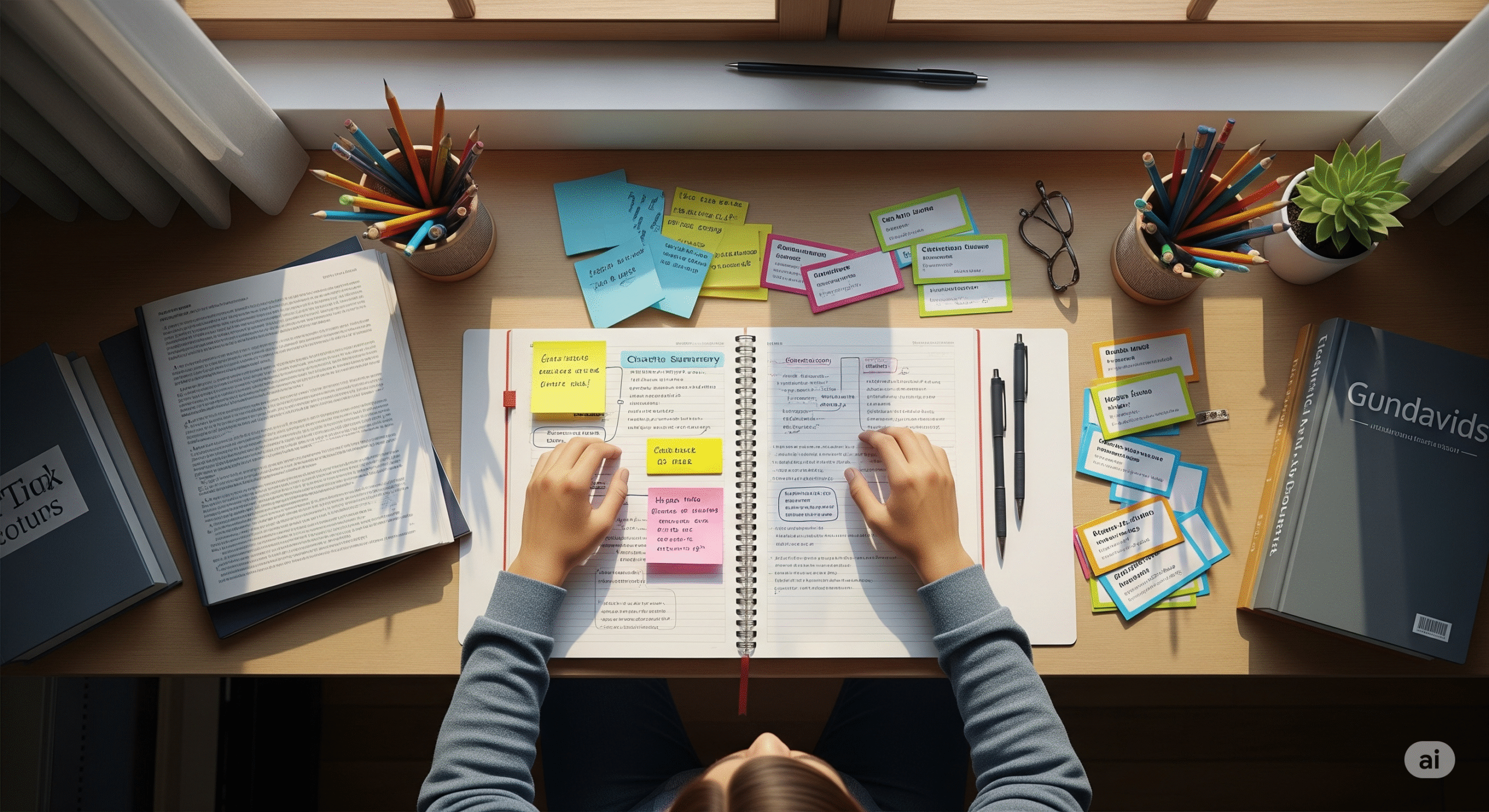
How Toppers Take Notes: Secret Strategies You Can Use Too
Taking effective notes is one of the key habits that distinguish toppers from average students. Note-taking is not just about writing what the teacher says—it’s a scientific method of organizing and retaining information for long-term understanding. Whether you’re a school student preparing for boards, a competitive exam aspirant, or a college student trying to stay ahead, learning how toppers take notes can transform your academic journey.
In this article, we’ll uncover the secret strategies toppers use to take notes and how you can implement them to boost your performance. From traditional pen-and-paper techniques to digital note-taking tools, we’ll explore it all.
📌 Why Note-Taking Matters
Before jumping into the methods, it’s important to understand why note-taking is essential for academic success:
- Enhances Memory Retention: Writing helps reinforce what you learn.
- Organizes Information: Notes provide a structured way to review.
- Boosts Focus: Active note-taking keeps you engaged in the class or while self-studying.
- Improves Revision: Condensed, well-organized notes make revision faster and more effective.
-

How Toppers Take Notes 10 Secret Strategies You Can Start Using Today

✨ Secret Strategies Toppers Use for Taking Notes
Here are the time-tested, practical note-taking secrets toppers follow:
🔹 1. Start with a Clear Purpose
Toppers don’t take notes blindly. Before starting, they ask:
- Why am I taking notes?
- What is the goal—memorization, understanding, or reference?
They adapt their style based on the subject. For example:
- Biology or History: Focused on facts, definitions, flowcharts.
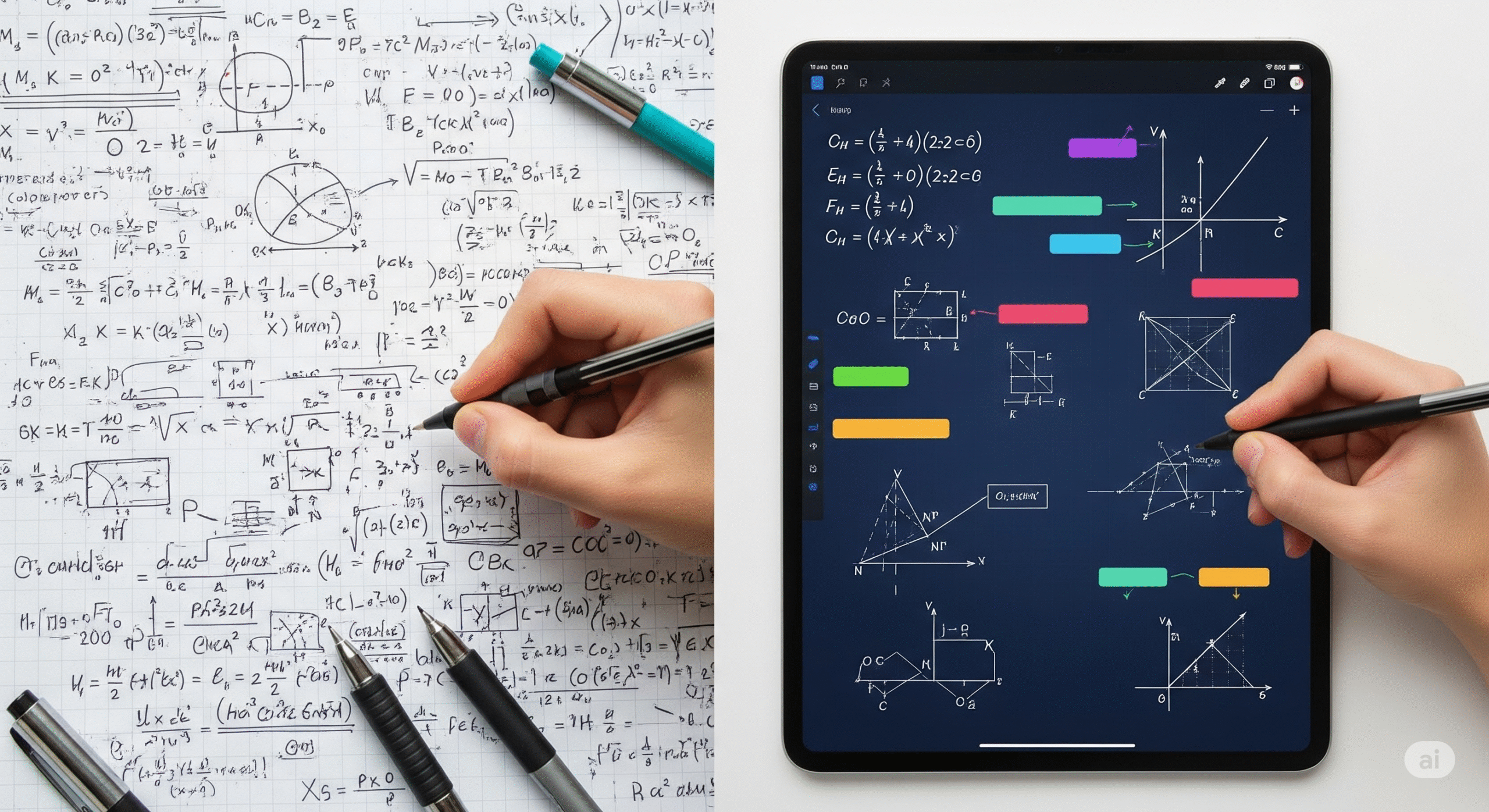
- Physics or Math: Emphasis on formulas, problem-solving steps, concepts.
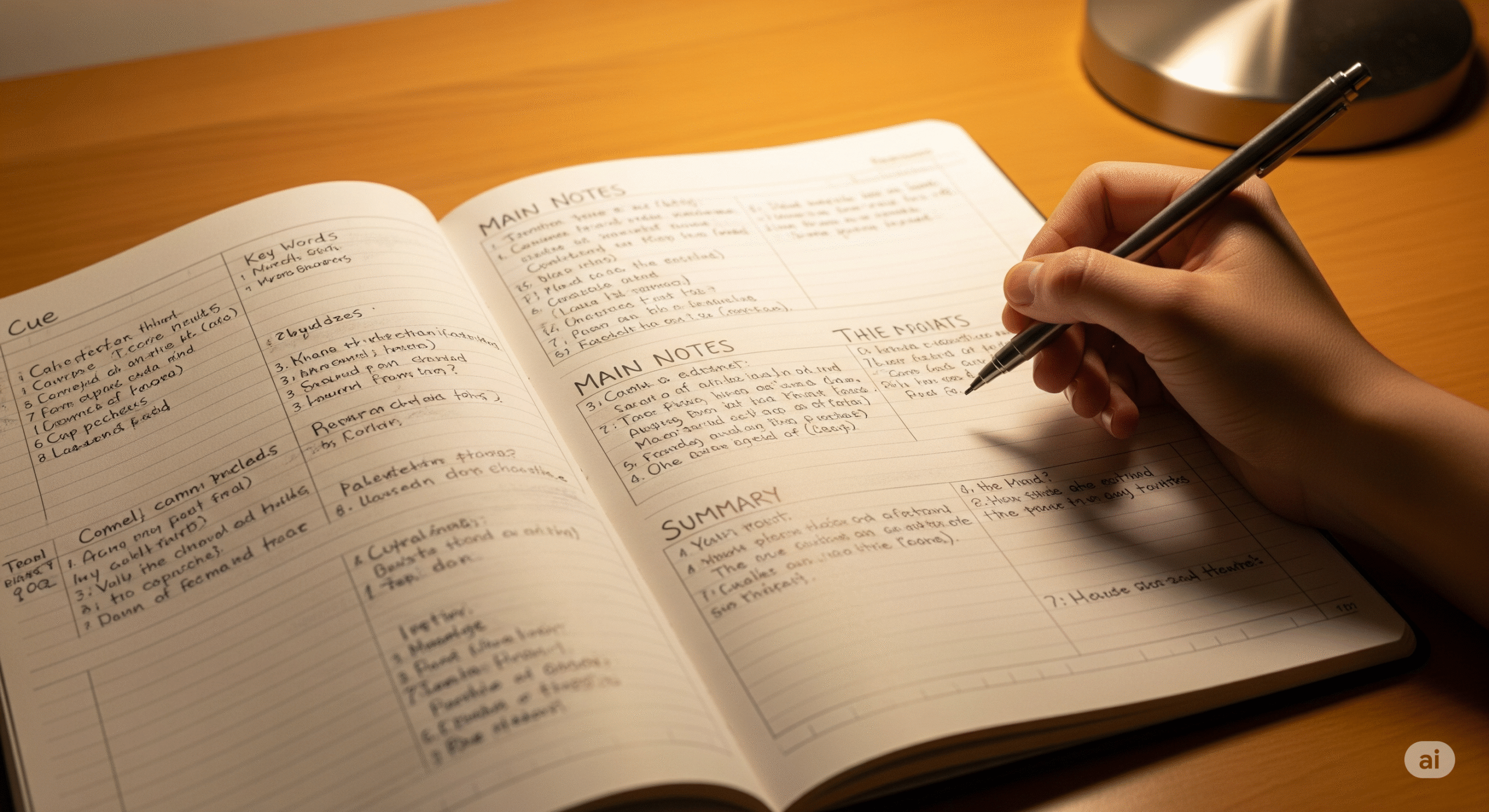
🔹 2. Use the Cornell Note-Taking System
The Cornell Method is one of the most effective techniques used by toppers. It divides the page into three sections:
Section |
Purpose |
| Cue Column (Left) | Keywords, questions |
| Note-Taking Area (Right) | Main notes during class or study |
| Summary (Bottom) | After-class summary in your own words |
This method enhances active recall and improves comprehension.
🔹 3. Follow the “Understand First, Write Later” Rule
Toppers don’t just copy what’s on the board or textbook. They first understand the concept and then write it in their own words. This improves clarity and prevents passive learning.
Pro Tip: After reading a paragraph or attending a lecture, pause for 30 seconds, mentally summarize, then write.
🔹 4. Use Visual Aids: Diagrams, Flowcharts, and Mind Maps
Toppers often turn complex topics into visuals:
- Mind Maps: For subjects like Biology, Geography, or Literature.
- Flowcharts: For process-oriented topics in Chemistry or History.
- Diagrams: Especially useful in Biology or Physics.
These visuals make it easier to recall entire topics quickly during revision.
🔹 5. Color-Coding and Highlighting
Toppers often use different colors to:
- Highlight important formulas or definitions.
- Underline keywords.
- Mark questions for revision.
Example Color Code:
- 🟦 Blue = Headings
- 🟨 Yellow = Definitions
- 🟥 Red = Must-revise topics
But they don’t overdo it—too many colors can clutter the page.
🔹 6. Maintain a Separate Formula/Concept Sheet
For subjects like Math, Physics, and Chemistry, toppers keep a running list of all key formulas and laws in a separate notebook or sheet.
They revise this regularly and keep it handy during final exam preparation.
🔹 7. Use Abbreviations and Symbols
To save time, toppers create their own shorthand symbols, such as:
- → for “leads to”
- ∴ for “therefore”
- ⬆️ / ⬇️ for increase or decrease
- W/ = with, W/O = without
This helps in writing faster while still capturing all the essential ideas.
🔹 8. Divide Notes into “Concept + Example + Summary”
Each note section ideally includes:
- Concept – What is it?
- Example – How does it work?
- Summary – Why it matters or how it’s applied
This structure makes it easier to grasp the idea and remember it during exams.
🔹 9. Review and Revise Notes Regularly
Toppers don’t just take notes and forget them. They:
- Review notes weekly
- Use sticky notes or tabs to update or add information
- Convert notes into flashcards or summary sheets for quick revision
🔹 10. Use Digital Tools Wisely
Many toppers blend digital and traditional note-taking. They use apps like:
- Notion or OneNote for organizing chapter-wise notes
- Anki for spaced-repetition flashcards
- Google Keep or Evernote for quick jot-downs
However, they avoid distractions and focus on clarity over aesthetics.
📚 Subject-Wise Note-Taking Tips
Let’s explore how toppers approach different subjects:
✅ Science (Physics, Chemistry, Biology)
- Make a concept sheet + formula list
- Include diagrams and labelled charts
- Write steps of derivations neatly
- Highlight important laws and exceptions
✅ Math
- Write solved examples and tricks
- Include formula box on each topic
- Maintain an error log for mistakes you make in practice
- Focus on step-wise solutions and shortcuts
✅ Social Science / History / Geography
- Use mind maps and timelines
- Focus on cause-effect relationships
- Make tables for dates/events, acts, revolutions
✅ English / Literature
- Summarize stories and poems
- Maintain a character list and theme list
- Note important quotes and their meanings
🧠 Psychology Behind Toppers’ Note-Taking Habits
Several scientific studies support these strategies:
- A 2014 study from Princeton University found longhand notes improve conceptual understanding better than typed notes.
- The Ebbinghaus Forgetting Curve shows that students forget up to 70% of new information within 24 hours without revision. Regular note reviews help beat this curve.
- Active recall and spaced repetition, both integrated into topper-style note-making, are proven to improve long-term retention by up to 50%.
🛠️ Tools Toppers Use to Make Notes
✏️ Traditional Tools:
- Spiral-bound notebooks
- Colored pens and highlighters
- Sticky notes
- Index cards for flashcards
💻 Digital Tools:
- Notion – for organizing multi-subject notes
- OneNote – for handwritten/drawn notes digitally
- Anki – for flashcards and spaced repetition
- Google Docs – for collaborative notes or summaries
⏳ How Much Time Should You Spend on Notes?
Toppers follow the Pareto Principle (80/20 Rule):
- Spend 20% of time on note-making
- Spend 80% of time on learning and revising from notes
They avoid rewriting full textbooks. Instead, they write only what adds value.
⚠️ Common Note-Taking Mistakes to Avoid
Even the best students can fall into traps. Avoid these:
- Writing too much or copying word-for-word
- Making notes once and never reviewing
- Using too many colors or fonts in digital notes
- Failing to organize notes subject-wise or chapter-wise
- Not updating your notes after learning new information
📝 Sample Note Format (for Biology Chapter: Human Digestive System)
Heading: Digestive System in Humans
Subheading: Organs Involved
Main Notes:
- Mouth: Ingestion, salivary amylase begins starch digestion
- Esophagus: Peristalsis
- Stomach: Pepsin, HCl for protein digestion
Diagram: Labeled digestive system
Flowchart: Food pathway – Mouth → Esophagus → Stomach → Small Intestine → Large Intestine → Rectum → Anus
Formula/Important Point: Pepsinogen + HCl → Pepsin (active enzyme)
Summary: Digestion involves mechanical + enzymatic breakdown of food for absorption
✅ Final Note: Practice Makes Perfect
Mastering note-making is not an overnight job. But by applying these topper strategies, you can build your own system that fits your learning style. It’s all about:
- Consistency
- Smart structure
- Regular revision
📣 Conclusion
Toppers don’t have a magical brain—they simply follow a smart, structured note-taking system. By focusing on understanding, using visual aids, keeping notes organized, and revising them regularly, they stay ahead of the competition.
Start by choosing one or two strategies mentioned above. Over time, refine your process and make it your own. Whether you’re aiming for board exams, JEE/NEET, or college success, these strategies can help you study smarter, not harder.
FAQs
1. What is the importance of note-taking for students?
Note-taking helps students actively engage with the material, boosts understanding, aids memory retention, and creates an organized reference for revision. Toppers use it to simplify complex topics and revise faster before exams.
2. Do all toppers take notes?
Yes, almost all toppers develop their own system of note-taking, tailored to their learning style. While some use digital tools, others prefer handwritten notes—but the core habit of effective note-making is common among them.
3. What is the Cornell Note-Taking Method?
The Cornell method divides a page into three sections: a cue column for keywords, a main note area for details, and a summary section at the bottom. It promotes organized learning and better retention through structured review.
4. Should I take notes while reading or after reading?
Toppers usually read first to understand, then summarize the key points in their own words. This method avoids mindless copying and ensures better conceptual clarity.
5. How do toppers revise their notes?
They revise weekly or biweekly, convert key points into flashcards, and often rewrite notes into simpler formats like mind maps or summaries closer to exams.
6. How can I make my notes visually appealing?
Use bullet points, colored headings, diagrams, flowcharts, and highlighters—but don’t overdo it. Keep your notes clean, readable, and organized for quick scanning.
7. Are digital notes better than handwritten ones?
Each has pros and cons. Handwritten notes aid memory better, while digital notes offer searchability and organization. Toppers often blend both for maximum benefit.
8. What are mind maps and how do toppers use them?
Mind maps are visual diagrams that connect main topics with subtopics. Toppers use them to summarize entire chapters or link related concepts, especially in subjects like Biology and Geography.
9. How do I take notes for problem-solving subjects like Math?
Write down step-by-step solutions, formulas, shortcut tricks, and errors you make during practice. Maintain a separate formula sheet and keep revisiting it.
10. Is summarizing better than writing full sentences in notes?
Yes. Summarizing forces you to understand and condense information. Use your own words instead of copying full sentences from books or lectures.
11. How can I remember what I write in my notes?
Use active recall techniques. Cover the notes, try to recall the content, then check for accuracy. Rewriting and teaching the notes to others also helps reinforce memory.
12. What kind of notebooks do toppers use?
Toppers use subject-wise spiral or bound notebooks. Some maintain a master notebook and a rough or practice notebook, especially for subjects like Math and Physics.
13. How often should I revise my notes?
Follow the 1-7-30 rule: review notes after 1 day, again in 7 days, and once more in 30 days. This technique beats the forgetting curve and strengthens long-term retention.
14. How many hours do toppers spend on note-making?
They spend around 15–20% of their total study time on note-making. The rest is spent on learning, solving, revising, and testing from those notes.
15. What are flashcards and how do toppers use them?
Flashcards are small cards with questions on one side and answers on the other. Toppers use them for definitions, formulas, dates, and facts—especially for quick revision.
16. Can I download topper notes online?
While some topper notes are available online, they are not personalized to your understanding. It’s better to use them as references and make your own custom notes for effective learning.
17. Should I make notes during or after class?
Take brief notes during class and expand them afterward. This ensures you capture key ideas in the moment and clarify them while the concept is still fresh.
18. How do toppers manage bulky subjects like History or Biology?
They condense large chapters into flowcharts, diagrams, and timelines, focusing on key terms, processes, and cause-effect relationships to make revision faster and easier.
19. What are the best apps for digital note-taking?
Popular apps used by toppers include:
- Notion: for subject-wise organization
- OneNote: for handwritten digital notes
- Anki: for flashcards and spaced repetition
- Google Keep/Evernote: for quick notes
20. How do toppers make notes for NEET or JEE exams?
They write short, conceptual notes with formulas, solved examples, and previous year question references. They also maintain an error notebook to track mistakes in mock tests.
21. Can I use audio recordings for note-taking?
Some toppers record classes or explanations and later convert them into written notes. It’s especially useful for auditory learners, but it’s important to summarize later for proper retention.
22. What is an error log and why do toppers maintain one?
An error log is a small notebook where you list mistakes made in tests or practice. Toppers use it to avoid repeating the same errors and to focus their revision effectively.
23. Do toppers revise their notes during the exam week?
Yes, they rely heavily on their notes during final revisions. Since the notes are condensed, visually structured, and already familiar, they save time and reduce stress during exams.
24. How to avoid copying from textbooks when making notes?
Read a paragraph, close the book, and try writing the summary in your own words. This process builds understanding and avoids mindless transcription.
25. How do toppers organize their notes for quick access?
They use:
- Clear headings and subheadings
- Page numbers and index
- Color-coded sticky notes
- Digital folders and tags (in case of apps)
26. What should I include in my daily study notes?
Include definitions, concepts, diagrams, formulas, key questions, and doubts. Review and refine them at the end of the day.
27. Can I convert notes into questions for practice?
Absolutely. Many toppers turn their notes into practice questions, especially for theory-heavy subjects. It helps with active recall and improves exam readiness.
28. Is note-making time-consuming?
It might take time initially, but well-made notes save hours during revision and improve understanding. The return on investment is high.
29. What is the biggest mistake to avoid in note-making?
Avoid copying everything word-for-word, making notes too long, or never revising them. The goal is quality, not quantity.
30. Can I start making notes mid-year or should I start from the beginning?
You can start any time. It’s never too late. Start with current topics and gradually work backward to complete previous chapters.
Follow us on Instagram
OUR YOUTUBE CHANNEL

ALSO READ
Best Books for JEE and NEET 2025 A Comprehensive Guide
NEET and JEE 2026 Exam Pattern Changes Full Details, New Format, and Preparation Tips
NEET 2026 Dropper Strategy Best Tips to Crack NEET in First Attempt
Top Career Options in Biology Without NEET 2025 Courses, Jobs and Salary Guide