
How AI Can Help Students in Their Studies: Revolutionizing Education
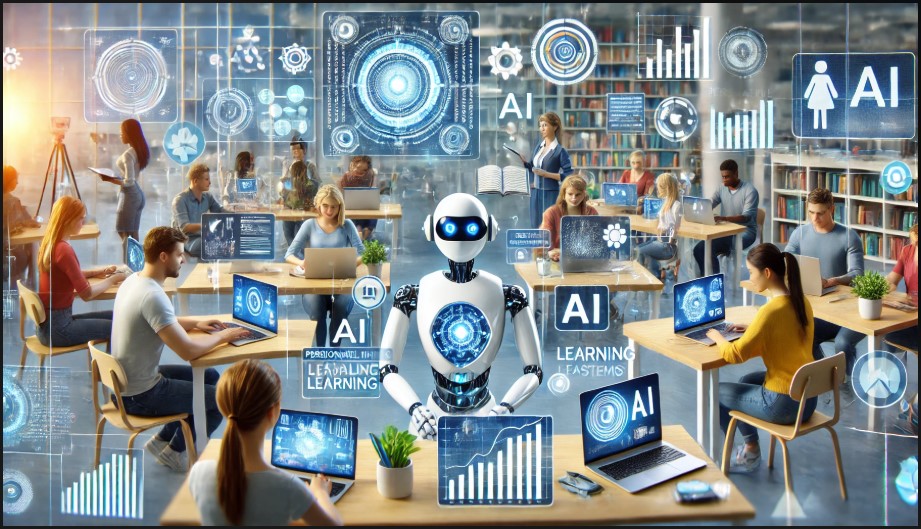
**Table of Contents**
-
Introduction
-
Personalized Learning Experiences
-
24/7 Access to Tutoring and Assistance
-
Enhanced Study Tools
-
Automated Grading and Feedback
-
Improved Time Management and Productivity
-
Accessible Education for All
-
Data-Driven Insights for Better Outcomes
-
Encouraging Lifelong Learning
-
Challenges and Considerations
-
Conclusion
—
How AI Can Help Students in Their Studies: Revolutionizing Education
**How AI Can Help Students in Their Studies: Revolutionizing Education**
Artificial Intelligence (AI) has become a transformative force across various industries, and education is no exception. From personalized learning experiences to automating administrative tasks, AI is reshaping how students learn, study, and succeed. For students, AI offers a wealth of tools and resources that can make studying more efficient, engaging, and effective. In this blog post, we’ll explore how AI can help students in their studies and why it’s a game-changer for education.
—
### 1. **Personalized Learning Experiences**
One of the most significant advantages of AI in education is its ability to provide personalized learning experiences. Every student learns at their own pace and has unique strengths and weaknesses. Traditional classroom settings often struggle to cater to the individual needs of each student, but AI-powered platforms can bridge this gap.
Adaptive learning systems, for instance, analyze a student’s performance and tailor content to meet their specific needs. These systems use algorithms to identify areas where a student may be struggling and provide additional resources or practice problems to help them improve. For example, if a student excels in geometry but struggles with algebra, the platform can focus on strengthening their algebra skills while still challenging them in geometry.
This level of customization ensures that students stay engaged and motivated. It also helps prevent the frustration that can arise from being either under-challenged or overwhelmed. By catering to individual learning styles and paces, AI makes education more inclusive and effective.
—
### 2. **24/7 Access to Tutoring and Assistance**
AI-powered chatbots and virtual tutors are revolutionizing the way students access help. Tools like ChatGPT, Socratic by Google, and other AI-driven platforms are available around the clock to answer students’ questions. Whether it’s solving a math problem, explaining a complex concept, or helping with essay writing, these tools provide instant support.
This is particularly beneficial for students who may not have access to in-person tutoring or who need help outside of regular school hours. AI tutors can break down topics into simpler terms, provide step-by-step solutions, and even offer practice exercises to reinforce learning. For example, a student struggling with calculus at midnight can turn to an AI tutor for immediate assistance, ensuring that their learning process isn’t interrupted.
Moreover, AI tutors can adapt to a student’s learning style. If a student learns better through visual aids, the AI can provide diagrams or videos. If they prefer text-based explanations, the AI can deliver detailed written responses. This flexibility makes AI an invaluable resource for students of all ages and learning preferences.
—
### 3. **Enhanced Study Tools**
AI has given rise to a variety of study tools that make learning more interactive and effective. These tools not only save time but also help students retain information better and develop essential skills.
– **Flashcard Apps**: AI-driven apps like Quizlet use spaced repetition algorithms to help students memorize information more efficiently. Spaced repetition is a learning technique that involves reviewing material at increasing intervals, which has been proven to enhance long-term retention.
– **Language Learning Apps**: Tools like Duolingo use AI to adapt lessons based on a student’s progress and proficiency. The app tracks a user’s performance and adjusts the difficulty level of exercises accordingly, ensuring that they are always challenged but not overwhelmed.
– **Writing Assistants**: AI tools like Grammarly help students improve their writing by providing real-time feedback on grammar, style, and tone. This is particularly useful for students working on essays, research papers, or creative writing assignments.
These tools not only make studying more efficient but also more enjoyable. By incorporating gamification elements, such as rewards and progress tracking, AI-powered study tools keep students motivated and engaged.
—
### 4. **Automated Grading and Feedback**
Teachers often spend countless hours grading assignments and providing feedback. AI can automate this process, allowing educators to focus more on teaching while still giving students timely and constructive feedback.
Automated grading systems use machine learning algorithms to evaluate assignments, quizzes, and exams. These systems can grade multiple-choice questions, short answers, and even essays with a high degree of accuracy. For example, platforms like Turnitin use AI to check for plagiarism and provide feedback on writing quality.
For students, this means faster turnaround times for graded work and more detailed insights into their performance. AI can even identify patterns in mistakes, helping students understand where they need to improve. For instance, if a student consistently makes errors in verb conjugation in a foreign language class, the AI can highlight this issue and suggest targeted exercises to address it.
—
### 5. **Improved Time Management and Productivity**
AI-powered productivity tools can help students manage their time more effectively. Apps like Todoist, Notion, and Microsoft MyAnalytics use AI to prioritize tasks, set reminders, and create study schedules. These tools analyze a student’s habits and suggest ways to optimize their routine for better results.
For example, if a student tends to procrastinate, an AI tool might recommend breaking tasks into smaller, manageable chunks or using the Pomodoro technique to stay focused. The Pomodoro technique involves working for a set period (e.g., 25 minutes) and then taking a short break, which has been shown to improve concentration and productivity.
AI can also help students balance their academic and personal lives. By analyzing a student’s schedule and workload, AI tools can suggest when to study, when to take breaks, and when to engage in extracurricular activities. This holistic approach ensures that students stay productive without burning out.
—
### 6. **Accessible Education for All**
AI is breaking down barriers to education by making learning more accessible. For students with disabilities, AI-powered tools like speech-to-text software, text-to-speech readers, and visual aids can provide the support they need to succeed. For example, students with visual impairments can use AI-driven screen readers to access digital textbooks, while those with hearing impairments can benefit from real-time captioning during lectures.
Additionally, AI can translate educational content into multiple languages, making it easier for non-native speakers to access resources. This is particularly important in multicultural classrooms or for students studying abroad. By removing language barriers, AI ensures that all students have equal opportunities to learn and succeed.
—
### 7. **Data-Driven Insights for Better Outcomes**
AI can analyze vast amounts of data to identify trends and patterns in student performance. For example, it can predict which students are at risk of falling behind and suggest interventions to help them catch up. This data-driven approach ensures that no student is left behind and that resources are allocated where they’re needed most.
Educational institutions can use AI to track student progress over time and identify areas where the curriculum may need improvement. For instance, if a large number of students are struggling with a particular topic, the school can revise its teaching methods or provide additional resources to address the issue.
—
### 8. **Encouraging Lifelong Learning**
AI doesn’t just help students during their school years—it also fosters a culture of lifelong learning. With AI-driven platforms like Coursera, Khan Academy, and Udemy, students can continue to acquire new skills and knowledge long after they’ve graduated. These platforms use AI to recommend courses based on a user’s interests and career goals, making it easier to stay motivated and engaged.
For example, a professional looking to transition into data science can use AI-powered platforms to identify the most relevant courses and track their progress. By providing personalized recommendations and feedback, AI makes lifelong learning more accessible and enjoyable.
—
### 9. **Challenges and Considerations**
While AI offers incredible benefits, it’s important to address potential challenges. Privacy concerns, data security, and the risk of over-reliance on technology are valid issues that need to be managed. Additionally, AI should complement, not replace, the human element of teaching. The guidance and mentorship of educators remain irreplaceable in a student’s academic journey.
—
### 10. **Conclusion**
AI is revolutionizing the way students learn and study, offering personalized, accessible, and efficient solutions to enhance education. By leveraging AI-powered tools and platforms, students can improve their productivity, deepen their understanding of complex topics, and achieve their academic goals more effectively. As AI continues to evolve, its potential to transform education is limitless—empowering students to not only succeed in their studies but also thrive in an increasingly digital world.
Whether you’re a student looking to optimize your study routine or an educator exploring innovative teaching methods, embracing AI is a step toward a brighter, more inclusive future for education. The future of learning is here, and it’s powered by AI.
Follow us on instagram
OUR YOUTUBE CHANNEL
