
CHAPTER 1 LIVING WORLD PRACTICE QUESTIONS
NOTES – CHAPTER 1 LIVING WORLD PRACTICE QUESTIONS
1. The characteristics of growth include
A) increase in mass B) increase in number
C) increase in length D) both A. and B.
ANSWER – D) both A. and B.
2. Unicellular organisms grow by
A) cell elongation B) cell division
C) accumulation of material on the surface D) none of these
ANSWER – B) cell division
3. Mountains, boulders and sand mounds also grow, but they are not considered as living organisms because they grow by
A) Accumulation of material on their inner surface.
B) the division of their particles.
C) accumulation of material on their outer surface.
D) both A. and B.
ANSWER – C) accumulation of material on their outer surface.
4. Choose the correct statement about growth in plants.
A) Growth occurs continuously throughout their lifespan by cell division.
B) The growth is seen only upto a certain age.
C) Growth occurs by the accumulation of material on the upper surface of their cells.
D) Growth occurs only in certain cells.
ANSWER – A) Growth occurs continuously throughout their lifespan by cell division.
5. In yeast and Hydra, reproduction occurs by
A) conjugation B) sporulation
C) budding D) none of these
ANSWER – C) budding
6. The organism(s) that can multiply by fragmentation is/are
A) fungi B) filamentous algae
C) protonema of moss D) all of these
ANSWER – D) all of these
7. In Amoeba, reproduction is synonymous with
A) digestion B) growth
C) locomotion D) none of these
ANSWER – B) growth
8. Living organisms that do not reproduce are
A) mule B) worker bees
C) infertile human couples D) all of these
ANSWER – D) all of these
9. Match Column-I with Column-II and choose the correct option from the codes given below.
Column-I Column-II
(Organism) (Method of reproduction)
a Planaria (1) Fragmentation
b Hydra (2) Regeneration
c Fungi (3) Binary fission
d Amoeba (4) Budding
Codes
a b c d a b c d
A) 2 4 1 3 B) 4 2 3 1
C) 3 1 4 2 D) 1 3 2 4
ANSWER – A) 2 4 1 3
10. The sum total of all the chemical reactions occurring in our body is
A) anabolism B) catabolism C) metabolism D) none of these
ANSWER – C) metabolism
11. An isolated metabolic reaction outside the body of an organism, performed in a test tube is
A) living
B) non-living
C) neither living nor non-living
D) sometimes living and sometimes nonliving depending upon environmental factors
ANSWER – C) neither living nor non-living
12. Choose the incorrect statement from the following:
A) All living organisms exhibit metabolism.
B) Metabolism is the sum total of all chemical reactions occurring in our body.
C) Metabolism is a defining feature of all living organisms.
D) Metabolic reactions cannot be demonstrated outside the body in cellfree systems.
ANSWER – D) Metabolic reactions cannot be demonstrated outside the body in cellfree systems.
13. Isolated metabolic reactions occurring invitro are not living things, but surely living reactions. It proves that ‘A’ of the body is the defining feature of life forms. Here ‘A’ is
A) reproduction B) cellular organization
C) metabolic reactions D) growth
D) Metabolic reactions cannot be demonstrated outside the body in cellfree systems.
ANSWER – B) cellular organization
14. Identify the defining characteristics of living organisms from the following.
A) Growth B) Ability to make sound
C) Reproduction D) Response to external stimuli
ANSWER – D) Response to external stimuli
15. Photoperiod affects
A) reproduction B) metabolism
C) growth D) cellular organization
ANSWER – A) reproduction
16. Living organisms respond to environmental stimuli which could be
A) physical B) chemical C) biological D) all of these
ANSWER – D) all of these
17. Match Column-I with Column-II and choose the correct option from the codes given below:
Column-I Column-II
a Growth (1) Production of progeny
b Reproduction (2) Sum of all chemical reactions occurring
in body
c Metabolism (3) Sense and respond to environmental
stimuli
d Consciousness (4) Increase in mass and number
Codes
a b c d a b c d
A) 3 2 4 1 B) 4 1 2 3
C) 1 3 2 4 D) 2 4 3 1
ANSWER – B) 4 1 2 3
18. All living organisms are linked to each other because
A) they show a common cellular organization.
B) they possess common genetic material of the same type.
C) they share common genetic material but to varying degrees.
D) all of these.
ANSWER – C) they share common genetic material but to varying degrees.
19. Assertion: Non-living objects also grow.
Reason: They grow by accumulation of material on the surface.
A) Both assertion and reason are true and reason is the correct explanation of assertion.
B) Both assertion and reason are true but reason is not the correct explanation of assertion.
C) Assertion is true but reason is false.
D) Both assertion and reason are false.
ANSWER – A) Both assertion and reason are true and reason is the correct explanation of assertion.
20. Assertion: Reproduction is not a defining property of living organisms.
Reason: Mules do not reproduced.
A) Both assertion and reason are true and reason is the correct explanation of assertion.
B) Both assertion and reason are true but reason is not the correct explanation of assertion.
C) Assertion is true but reason is false.
D) Both assertion and reason are false.
ANSWER – A) Both assertion and reason are true and reason is the correct explanation of assertion.
21. Assertion: Non-living objects also exhibit metabolism.
Reason: Isolated metabolic reactions occurring, invitro are living things.
A) Both assertion and reason are true and reason is the correct explanation of assertion.
B) Both assertion and reason are true but reason is not the correct explanation of assertion.
C) Assertion is true but reason is false.
D) Both assertion and reason are false.
ANSWER – D) Both assertion and reason are false.
22. The process of naming of living organisms is called
A) systematics B) taxonomy C) nomenclature D) none of these
ANSWER – C) nomenclature
24. Identification of an organism means
A) its correct description B) its correct classification
C) its correct nomenclature D) all of these
ANSWER – D) all of these
25. ICBN stands for
A) International Code for Biological Naming
B) International Centre for Botanical Nomenclature
C) Indian Code for Biological Nomenclature
D) International Code for Botanical Nomenclature
ANSWER -D) International Code for Botanical Nomenclature
26. Choose the correct statement about scientific names.
A) They ensure that each organism has only one name.
B) Description of any organism should enable the people to arrive at the same name.
C) They ensure that such a name has not been used for any other organism.
D) All of these.
ANSWER – D) All of these.
27. The system of providing a name with two components is called
A) trinomial nomenclature B) binomial nomenclature
C) uninominal nomenclature D) none of these
ANSWER – B) binomial nomenclature
28. The naming system, which is practised by biologists all over the world, was given by
A) Carolus Linnaeus B) Whittaker
C) Haeckel D) Woese
ANSWER – A) Carolus Linnaeus
29. Match the Column-I with Column-II and choose the correct option from the codes given below.
Column-I Column-II
a Biodiversity (1) Correct description of an organism
b Nomenclature (2) The variety of living organisms
c Identification (3) A system of providing a name with two
components
d Binomial nomenclature (4) Naming of living organisms
Codes –
a b c d a b c d
A) 2 4 1 3 B) 4 3 2 1
C) 1 2 4 3 D) 3 1 4 2
ANSWER – A) 2 4 1 3
30. Select correctly written scientific name of mango which was first described by Carolus Linnaeus.
A) Mangifera indica Car Linn. B) Mangifera indica Linn.
C) Mangifera indica D) Mangifera Indica
ANSWER – B) Mangifera indica Linn.
31. In Mangifera indica Linn., the specific epithet is
A) Mangifera B) indica C) Linn. D) Both A. and B.
ANSWER – B) indica
32. Choose the incorrect statement about rules of nomenclature.
A) Biological names are generally given in Latin.
B) The first word in biological name represents the genus while the second component denotes the specific epithet.
C) When hand written, both words of biological names are separately underlined.
D) Both the words of biological name start with capital letter.
ANSWER – D) Both the words of biological name start with capital letter.
33. Which of the following is against the rules of ICBN?
A) Handwritten scientific names should be underlined.
B) Every species should have a generic name and a specific epithet.
C) Scientific names are in latin and should be italized.
D) Generic and specific names should be written starting with small letters.
ANSWER – D) Generic and specific names should be written starting with small letters.
34. Biological names are generally written in
A) Greek language B) Latin language
C) English language D) Hindi language
ANSWER – B) Latin language
35. The process by which organisms are grouped into convenient categories based on some easily observable characters, is called
A) taxonomy B) identification
C) classification D) nomenclature
ANSWER – C) classification
36. The scientific term used for the categories of organisms to study them is
A) taxa B) biological name C) systematics D) none of these
ANSWER – A) taxa
37. The process of classification is called
A) systematics B) taxonomy C) nomenclature D) identification
ANSWER – B) taxonomy
38. The modern taxonomic studies are based on
A) cell structures B) external and internal structure
C) development process D) all of these
ANSWER – D) all of these
39. Among the following process which one is not the basic to taxonomy?
A) Identification B) Classification
C) Collection of specimen D) Nomenclature
ANSWER – C) Collection of specimen
40. Systematics refers to
A) diversities of different kinds of organisms and their relationship.
B) identification and study of organ systems of organisms.
C) identification and preservation of organisms.
D) study of habitat of organisms and their classification.
ANSWER – A) diversities of different kinds of organisms and their relationship.
41. Match Column-I with Column-II and choose the correct option from the codes given below.
Column-I Column-II
a Mammalia (1) Specific epithet
b Mangifera (2) Branch of study
c indica (3) Taxa
d Systematics (4) Generic name
Codes –
a b c d a b c d
A) 3 4 1 2 B) 2 1 3 4
C) 1 2 4 3 D) 4 3 2 1
ANSWER – A) 3 4 1 2
42. Assertion: Binomial nomenclature given by Linnaeus is being practiced by biologists all over the world.
Reason: Each name of this system has two components, the generic name and the specific epithet.
A) Both Assertion and Reason are true and Reason is correct explanation of Assertion.
B) Both Assertion and Reason are true, but Reason is not the correct explanation of Assertion.
C) Assertion is true, but Reason is false. D) Assertion is false, but Reason is true.
ANSWER – A) Both Assertion and Reason are true and Reason is correct explanation of Assertion.
43. Assertion: The process of classification of organisms is taxonomy.
Reason: It is merely based on the external features of organisms.
A) Both Assertion and Reason are true and Reason is correct explanation of Assertion.
B) Both Assertion and Reason are true, but Reason is not the correct explanation of Assertion.
C) Assertion is true, but Reason is false. D) Assertion is false, but Reason is true.
ANSWER – C) Assertion is true, but Reason is false.
44. Assertion: Systematics is the study of organisms, their diversities but not the relationships among them.
Reason: Systematics is derived from a English word ‘systema’.
A) Both Assertion and Reason are true and Reason is correct explanation of Assertion.
B) Both Assertion and Reason are true, but Reason is not the correct explanation of Assertion.
C) Assertion is true, but Reason is false. D) Assertion is false, but Reason is true.
ANSWER – D) Assertion is false, but Reason is true.
45. All the taxonomic categories together constitute the
A) taxon B) family C) kingdom D) hierarchy
ANSWER – D) hierarchy
46. The lowest taxonomic category is
A) agenus B) species C) class D) family
ANSWER – B) species
47. The basic requirement for placing an organism in various categories is the knowledge of
A) characters of an individual B) characters of group of organisms
C) binomial nomenclature D) both A and B
ANSWER – D) both A and B
48. Solanum includes species
A) nigrum B) melongena C) tuberosum D) all of these
ANSWER – D) all of these
49. The taxonomic category, genus represents
A) an individual organism B) a collection of organisms
C) a group of closely related species of organisms
D) none of these
ANSWER – C) a group of closely related species of organisms
50. Match Column-I and Column-II and choose the correct option from the codes given below.
Column-I Column-II
(Organism name) (Scientific name)
a Lion (1) Panthera tigris
b Leopard (2) Panthera leo
c Tiger (3) Solanum nigrum
d Potato (4) Panthera pardus
Codes –
a b c d a b c d
A) 2 4 1 3 B) 4 2 1 3
C) 1 2 4 3 D) 3 4 2 1
ANSWER – A) 2 4 1 3
51. ‘Suffix’ used for a unit of classification in plants to indicate ‘family’ taxonomic category is
A) -ales B) –onae C) -aceae D) ae
ANSWER – C) -aceae
52. The taxonomic category ‘order’ lies between
A) Genus and species B) Genus and family
C) Family and class D) Class and phylum
ANSWER – C) Family and class
53. Choose the incorrect statement from the following.
A) Each genus may have one or more than one specific epithets representing different organisms.
B) Potato and brinjal are two different species but both belong to the genus Solanum.
C) ‘Families’ are characterized on the basis of merely reproductive features of plant species.
D) ‘Order’ is a higher taxonomic category and is identified on the basis of aggregates of characteristics.
ANSWER – C) ‘Families’ are characterized on the basis of merely reproductive features of plant species.
54. Fishes, amphibians, reptiles and birds represent which taxonomic category?
A) Class B) Phylum C) Order D) Kingdom
ANSWER – B) Phylum
56. The ‘phylum’ taxon of animal classification is equivalent to which taxon of plant classification?
A) Class B) Division C) Order D) Family
ANSWER – B) Division
57. Refer to the given figure showing hierarchical arrangement of taxonomic categories in the ascending order. In the figure some taxa are labeled as A, B, C and D. Which taxon will show maximum similar characters among its members? Identify it.
A) B B) A C) C D) D
ANSWER – B) A
58. The kingdom that comprises all plants from various divisions is
A) Plantae B) Animalia C) Chordata D) Mammal
ANSWER – A) Plantae
59. Match the Column-I with Column-II and choose the correct option from the codes given below:
Column-I Column-II
a Order (1) Solanum
b Kingdom (2) Solanaceae
c Family (3) Plantae
d Genus (4) tuberosum
e Species (5) Polymoniales
Codes
a b c d e a b c d e
A) 5 3 2 1 4 B) 4 2 5 3 1
C) 1 5 3 4 2 D) 3 4 1 5 2
ANSWER – A) 5 3 2 1 4
60. In a taxonomic hierarchy, on moving from species to kingdom, the number of common characteristics
A) will increase B) remain same C) will decrease D) may increase or decrease
ANSWER – C) will decrease
61. Choose the correct statements from the following:
In case of plants, classes with a few similar characters are aligned to a higher category called phylum.
Sub-categories have also been developed in the taxonomic hierarchy to facilitate more sound and scientific placement of various taxa.
III. Class includes related orders.
Convolvulaceae family is included in polymoniales order on the basis of its floral characters.
Select the correct option.
A) I and IV B) II and III C) II, III and IV D) All of these
ANSWER – B) II and III
62. Match Column-I with Column-II for housefly classification and select the correct option using the codes given below.
Column-I Column-II
a Family (1) Diptera
b Order (2) Arthropoda
c Class (3) Muscidae
d Phylum (4) Insecta
Codes
a b c d a b c d
A) 4 3 2 1 B) 4 2 1 3
C) 3 1 4 2 D) 3 2 4 1
ANSWER – C) 3 1 4 2
63. Assertion: Genus may have one or more than one species epithets.
Reason: Genus comprises a group of related species.
A) Both Assertion and Reason are true and Reason is correct explanation of Assertion.
B) Both Assertion and Reason are true, but Reason is not the correct explanation of Assertion.
C) Assertion is true, but Reason is false.
D) Assertion is false, but Reason is true.
ANSWER – A) Both Assertion and Reason are true and Reason is correct explanation of Assertion.
64. Assertion: Order is the assemblage of families which exhibit a few similar characters.
Reason: Plant family polymoniales is included in the order solanaceae based on the floral characters.
A) Both Assertion and Reason are true and Reason is correct explanation of Assertion.
B) Both Assertion and Reason are true, but Reason is not the correct explanation of Assertion.
C) Assertion is true, but Reason is false. D) Assertion is false, but Reason is true.
ANSWER – C) Assertion is true, but Reason is false.
65. Assertion: Wheat belongs to the family poaceae.
Reason: Wheat is a member of order poales.
A) Both Assertion and Reason are true and Reason is correct explanation of Assertion.
B) Both Assertion and Reason are true, but Reason is not the correct explanation of Assertion.
C) Assertion is true, but Reason is false.
D) Assertion is false, but Reason is true.
ANSWER – B) Both Assertion and Reason are true, but Reason is not the correct explanation of Assertion.
66. Which of the following options represents the correct classification for the given animal?
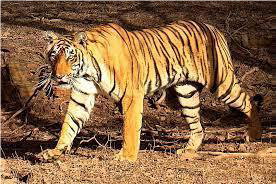
Phylum Class Order Family Genus Species
A) Chordata Vertebrata Chiroptera Felidae Canis Tigris
B) Chordata Mammalia Carnivora Felidae Panthera Tigris
C) Vertebrata Mammalia Carnivora Felidae Panthera Tigris
D) Mammalia Felidae Carnivora Feliaceae Panthera Leo
ANSWER – B) Chordata Mammalia Carnivora Felidae Panthera Tigris
67. Taxonomic studies of various organisms are useful in
A) agriculture B) forestry C) industry D) all of these
ANSWER – D) all of these
68. Taxonomic studies require
A) correct classification
B) correct identification of organisms
C) intensive laboratory and field studies
D) all of these
ANSWER – D) ALL OF THESE
69. A store house of collected plant specimens that are dried, pressed and preserved on sheets is a
A) herbarium B) botanical garden
C) zoological park D) catalogue
ANSWER – A) herbarium
70. Among the following, which information is not provided by the herbarium sheet about a plant?
A) Collector’s name B) Place of collection
C) Economic importance of plant species D) Botanical name of the plant
ANSWER – C) Economic importance of plant species
71. The specialized gardens having collections of living plants for reference are
A) Herbarium B) Botanical gardens
C) Zoological parks D) Museum
ANSWER – B) Botanical gardens
72. Match the Column-I and Column-II and choose the correct option from the codes given below:
Column-I Column-II
a Kew Botanical Garden (1) Dehradun
B Indian Botanical Garden (2) Lucknow
c National Botanical Research Institute (3) England
d Forest Research Institute (4) Howrah
Codes –
a b c d a b c d
A) 3 4 2 1 B) 4 2 3 1
C) 1 3 4 2 D) 2 1 3 4
ANSWER – A) 3 4 2 1
73. National Botanical Research Institute is situated at
A) Howrah B) Lucknow C) Dehradun D) Delhi
ANSWER – B) Lucknow
74. Choose the incorrect statement from the following:
A) Herbarium is a storehouse of collected plant specimens that are dried, pressed and preserved on sheets.
B) Herbaria serve as quick referral systems in taxonomical studies.
C) Botanical gardens have collection of preserved plant materials also.
D) Indian Botanical Garden is situated at Howrah, India.
ANSWER – C) Botanical gardens have collection of preserved plant materials also.
75. Biological museums have collection of
A) preserved plant specimens B) preserved animal specimens
C) live plants and animals D) both A and B
ANSWER – D) both A and B-
76. Insects are preserved in insect boxes
A) in preservative solutions B) after stuffing
C) after collecting, killing and pinning D) as skeletons
ANSWER – C) after collecting, killing and pinning
77. Match Column-I with Column-II and choose the correct option from the codes given below:
Column-I(Organism) Column-II (Method of preservation)
a Birds (1) Skeleton
b Human (2) Preservative solution
. c Insects (3) Stuffing
d Small animals (4) In boxes after killing and pinning
Codes –
a b c d a b c d
A) 3 1 4 2 B) 4 3 2 1
C) 1 2 3 4 D) 2 4 1 3
ANSWER – C) 1 2 3 4
78. The place where wild animals are kept in protected environment is
A) botanical garden B) zoological park
C) museum D) herbarium
ANSWER – B) zoological park
79. Zoological parks are commonly known as
A) museum B) garden C) zoo D) none of these
ANSWER – C) zoo
80. Zoological parks and botanical gardens have a collection of
A) exotic living species only B) endemic living species only
C) both A and B D) only local plants and animals
ANSWER – C) both A and B
81. Plants and animals are identified by key on the basis of their
A) morphology B) anatomy
C) similarities and dissimilarities D) all of these
ANSWER – C) similarities and dissimilarities
82. The keys are based on contrasting characters generally in a pair called
A) couplet B) doublet C) triplet D) all of these
ANSWER – A) couplet
83. The contrasting characteristics generally in a pair used for identification of animals in Taxonomic key are referred to as
A) Lead B) Couplet C) Doublet D) Alternate
ANSWER – B) Couplet
84. Taxonomic key is used in the preparation of the
A) monographs B) flora C) both A and B D) none of these
ANSWER – C) both A and B
85. Each statement of the key is called a
A) couplet B) lead C) monograph D) none of these
ANSWER – B) lead
86. Match items given in Column-I with those in Column-II and select the correct option given below.
Column-I Column-II
a Herbarium (1) It is a place having a collection of preserved plants and animals.
b Key (2) A list that enumerates methodically all the species
found in an area with brief description aiding identification.
c Museum (3) It is a place where dried and pressed plant specimens
mounted on sheets are kept.
d Catalogue (4) A booklet containing a list of characters and their alternates
which are helpful in identification of various taxa.
Codes –
a b c d a b c d
A) 1 4 3 2 B) 3 2 1 4
C) 2 4 3 1 D) 3 4 1 2
ANSWER – B) 3 2 1 4
87. Choose the correct statements about taxonomic keys.
It is used for the identification of only plants.
Each statement in the key is called a lead.
III. No separate taxonomic keys are required for different taxonomic categories.
A) II and III B) I and II C) III and I D) II only
ANSWER – D) II only
88. Among the following which one is not a taxonomic aid?
A) Flora B) Manual C) Taxon D) Key
ANSWER – C) Taxon
89. Among the following which one contains information on any one taxon?
A) Flora B) Monograph C) Manual D) Catalogue
ANSWER – B) Monograph
90. Assertion: Herbarium is a storehouse of collected plant specimens that are dried, pressed and preserved on sheets.
Reason: Herbaria serve as quick referral systems in taxonomical studies.
A) Both Assertion and Reason are true and Reason is correct explanation of Assertion.
B) Both Assertion and Reason are true, but Reason is not the correct explanation of Assertion.
C) Assertion is true, but Reason is false. D) Assertion is false, but Reason is true.
ANSWER – D) Assertion is false, but Reason is true.
91. Assertion: Museums have collection of live plants and animals.
Reason: In museums, as far as possible, conditions similar to their natural habitat are provided.
A) Both Assertion and Reason are true and Reason is correct explanation of Assertion.
B) Both Assertion and Reason are true, but Reason is not the correct explanation of Assertion.
C) Assertion is true, but Reason is false. D) Assertion is false, but Reason is true.
ANSWER – C) Assertion is true, but Reason is false.
92. Assertion: The taxonomical keys are based on the contrasting characters.
Reason: Each statement in the key is called a couplet.
A) Both Assertion and Reason are true and Reason is correct explanation of Assertion.
B) Both Assertion and Reason are true, but Reason is not the correct explanation of Assertion.
C) Assertion is true, but Reason is false.
D) Assertion is false, but Reason is true.
ANSWER – C) Assertion is true, but Reason is false.
93. Match the items given in column I with those in column II and select the correct option given below:
Column I Column II
Herbarium I. It is a place having a collection of preserved plants and animals.
Key II. A list that enumerates methodically all the species found in an area with brief
description aiding identification.
Museum III. It is a place where dried and pressed plant specimens mounted on sheets are kept.
Catalogue IV. A booklet containing a list of characters and their alternates which are helpful in
identification of various taxa.
(a) A – I; B – IV; C – III; D – II (b) A – III; B – II; C – I; D – IV
(c) A – III; B – IV; C – I; D – II (d) A – II; B – IV; C – III; D – I
ANSWER – (c) A – III; B – IV; C – I; D – II
94. Nomenclature is governed by certain universal rules. Which one of the following is contrary to the rules of nomenclature?
(a) Biological names can be written in any language.
(b) The first word in a biological name represents the genus name, and the second is a specific epithet.
(c) The names are written in Latin and are italicised.
(d) When written by hand, the names are to be underlined.
ANSWER – (a) Biological names can be written in any language.
95. It is much easier for a small animal to run uphill than for a large animal, because
(a) it is easier to carry a small body weight.
(b) smaller animals have a higher metabolic rate.
(c) small animals have a lower O2 requirement.
(d) the efficiency of muscles in large animals is less than in the small animals.
ANSWER – (b) smaller animals have a higher metabolic rate.
96. Select correctly written scientific name of Mango which was first described by Carolus Linnaeus
(a) Mangifera indica Car. Linn. (b) Mangifera indica Linn.
(c) Mangifera indica (d) Mangifera Indica
ANSWER – (b) Mangifera indica Linn.
97. The contrasting characteristics generally in a pair used for identification of animals in Taxonomic Key
are referred to as :
(a) Lead (b) Couplet (c) Doublet (d) Alternate
ANSWER – (b) Couplet