
23 REPRODUCTION IN ORGANISMS QUESTIONS
23 REPRODUCTION IN ORGANISMS QUESTIONS
Life span represents-
A) Period from birth to natural death of an organism
B) Period from birth to reproductive maturity of an organism
C) Period from reproductive maturity to death of an organism
D) Period from adolescence to senescent phase of an organism
Life span depends on-
A) Size of organism
B) Shape of organism
C) A and B both
D) None of these
Arrange the following organism on basis of their ascending life span.
A) Parrot, Crocodile, Crow, Butterfly
B) Tortoise, Crocodile, Crow, Butterfly
C) Butterfly, Crocodile, Parrot
D) A and B both
Which one of the following is correct statement with respect to life span of organisms?
A) Mango tree has a much longer lifespan as compared to peepal tree
B) Single celled organism doesn’t show natural death
C) Lifespan is correlated with complexity and habit of plant
D) Parrot has a shorter lifespan as compared to crow
Asexual reproduction-
A) Involvement of gamete formation
B) Fusion of male & female gamete
C) Without involvement of gamete formation
D) Biparental (opposite sex)
Clone are
A) Produce generally by sexual reproduction
B) Individual genetically similar to parent
C) Individual morphologically similar to parent
D) B and C both
Given below is figure represent-

A) Binary fission in Amoeba
B) Budding in Amoeba
C) Budding in Yeast
D) Binary fission in Yeast
Cell division is itself a mode of reproduction in-
A) Protists B) Moneran C) Fungi D) A and B both
Zoospores is mode of asexual reproduction in-
A) Chlamydomonas B) Penicillium C) Hydra D) Sponges
Choose the correct statement-
A) Conidia of Penicillium is endogenous borne
B) Gemmules of sponges is example of external budding
C) In Yeast, the division is unequal and small buds are produced
D) Zoospore is non-motile structure
Match Column-I and Column-II and select correct option.
Column-I Column-II
a) Tuber (i)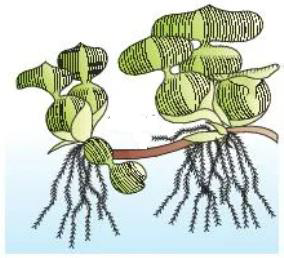
b) Rhizome (ii)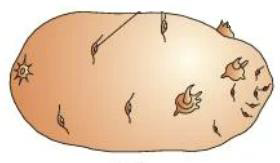
c) Bulbil (iii)
d)Leaf buds (iv)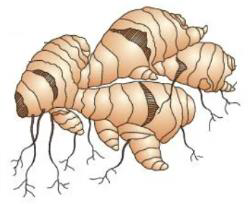
e) Offset (v)
A) a-ii, b-iv, c-iii, d-iv, e-i
B) a-ii, b-iv, c-v, d-iii, e-i
C) a-ii, b-iv, c-i, d-v, e-iii
D) None of these
Which of the following is not meant for vegetative propagation in Angiospermic plants.
A) Gemmules B) Runner C) Bulb D) Sucker
Vegetable propagation involve-
A) Uniparent B) Biparental C) Zoospores D) Reproduction by flower
Label A and B
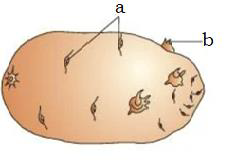
a b
A) Eyes Germinating eye bud
B) Germinating eye Eyes bud
C) Buds Adventitious root
D) Adventitious root Buds
Choose most appropriate statement about Water hyacinth.
(i) An aquatic plant that can propagate vegetatively at a phenomenal rate
(ii) Introduced in India because of beautiful flowers and shape of fruit
(iii) It reproduce by offset
(iv) It drains oxygen from water, which leads to death of fishes
(v) It spread all over the water body is a short period of time
(vi) It is very difficult to get rid off them
(vii) It is invasive weeds found growing wherever there is standing water
A) i, ii, iii, iv, v, vii, vii B) i, iii, iv, v, vi, vii
C) ii, iv, v, vi, vii D) None of these
Term ‘vegetative reproduction’ is frequently used in-
A) Plants B) Animals C) Monerans D) A and C both
Banana is reproduced vegetatively by-
A) Stolon B) Runner C) Rhizome D) Offset
‘Eyes’ of Potato arise from-
A) Node B) Internode C) Both A and B D) Root
Bryophyllum arise vegetatively by
A) adventitious bud arise from notches present at leaves margin.
B) adventitious bud arise from notches present at node.
C) adventitious bud arise from notches present at internode.
D) None of these
Arrange in sequence-
(i) Gamete transfer (ii) Formation of gamete
(iii) Post-fertilization (iv) Fertilization
A) ii-i-iv-iii B) i-iii-ii-iv C) iii-iv-ii-I D) iv-i-iii-ii
Choose correct statement with respect to sexual reproduction-
A) It involves formation of male & female gametes only by different individuals of the opposite sex.
B) It is an elaborate, simple and slow process as compared to asexual reproduction.
C) Zygotes are formed by fusion of gametes which develop to form the new organisms.
D) All of these
The period of growth where an organism is not nature for sexual reproduction is-
A) Juvenile phase B) Vegetative phase
C) Both A and B D) None of these
Choose incorrect statement among following-
A) In perennial species its show clear cut vegetative, reproductive and senescent phase.
B) In annual & biennial species it is show cut vegetative, reproductive & senescent phase.
C) In perennial species it is very difficult to define vegetative, reproductive & senescent phase.
D) A and B both
Neelakuranji flower once bloom in-
A) 12 years B) 12 months C) 12 days D) 36 years
Bamboo show flowering is
A) 10-20 years B) 50-100 years C) Once in every year D) B and C both
Choose correct statement about Strobilanthus Kunthianan.
A) This plant flowered during September-October 2006.
B) Its mass flowering transformed large tracks of hilly areas in Kerala, Karnataka and Tamil Nadu into
Pink stretches.
C) A and B both
D) Its flower during April-May 2006.
Oestrus cycle observed is-
A) Primates B) Non-primate C) Both A and B D) Human beings
Choose odd ones among following on basis of hormonal changes is reproductive phase.
A) Ape B) Cow C) Deer D) Tiger
Juvenile phase is related with all, except.
A) It is pre-reproductive phase of an individual.
B) It is of different durations in different organisms.
C) It is period of vegetative growth.
D) It involves appearance of flowers in higher plant.
Isogametes present not in-
A) Cladophora a fungi
B) Fucus an alga
C) Human beings
D) All of these
The given figure is of-
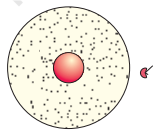
A) Heterogametes of Human beings
B) Heterogametes of Fucus, a fungi
C) Homogamete of Fucus, an alga
D) None of these
Choose the correct statement-
A) The process of formation of two types of gametes is known as gametogenesis.
B) In Cladophora the two gametes are so similar in appearance that it is not possible to categorise them into male & female gametes ; such known as heterogametes.
C) The male and female morphological distinct types of gamete is character of Fucus.
D) A & C both
Plants may have both male female reproductive structures in same pant is–
i) Bisexual ii) Unisexual iii) Monoecious iv) Dioecious
A) i & iii B) i & iv C) ii & iii D) ii & iv
Staminate and pistillate flower bear on different plant, term as –
i) Bisexual ii) Unisexual iii) Monoecious iv) Dioecious
A) i & iii B) i & iv C) iv & iii D) iv & ii
Choose odd one with respect to sexuality.
A) Cucurbit B) Cockroach D) Chara D) None of these
How many of following is monoecious/bisexual –
Papaya, Cucurbit, Datepalm, Cockroach, Marchantia, Earthworm, Sweet potato, Chara, Sponge , Tapeworm, Leech.
A) 4
B) 8
C) 7
D) 12
Which of the following is / are hermaphrodites
A) Cockroach B) Capeworm C) Earthworm D) Leech
Choose correct statement
A) A diploid parent produces gametes by mitotic division
B) A haploid parent produces gametes by mitotic division
C) A haploid parent produces gametes by meiotic division
D) Both A & C
Monera, Fungi, algae and bryophytes parental plant body is –
A) Same as in pteridophytes B) Haploid
C) Diploid D) Both A & B
Meiocytes of human beings –
A) Undergo meiosis for gamete formation
B) Undergo mitosis only
C) Both A & B
D) None of these
Meiocytes have –
A) One set of chromosomes
B) Two set of chromosomes
C Three set of chromosomes
D) All of these
Choose correct response among following –
A) The female sex organ of Chara positioned above antheridium
B) Testis sac of earthworm positioned below its ovary
C) Testis of cockroach positioned above ovary of same cockroach individual.
D) A and B both
Given diagram is of-
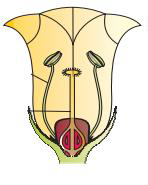
A) Bisexual flower of potato
B) Unisexual flower of sweet potato
C) Unisexual flower of potato
D) None of these
Among following maximum number of chromosome is meiocytes of-
A) Rice B) Maize C) Potato D) Onion
Arrange is ascending order, number of chromosomes in gamete-
A) Housefly, Fruitfly, Maize, Cat
B) Cat, Rat, Butterfly, Apple
C) Onion, Rice, Rat, Ophioglossum
D) Human, Potato, Dog, Butterfly
Ophioglossum is-
A) Algae B) Bryophytes C) Pteridophyte D) None of these
Find mismatched column.
| Column-I
(Organism) |
Column-II
(Chromosome number in meiocyte) |
Column-III
(Chromosome number in gamete) |
|
| A | Maize | 24 | 12 |
| B | Onion | 16 | 8 |
| C | Dog | 78 | 39 |
| D | Apple | 34 | 17 |
In bryophyte, pteridophyte gamete transfer need-
A) Air B) Water C) Biotic agent D) None of these
Choose the correct statement- .
A) In a majority of organisms, male gamete is stationary and female gamete is motile.
B) A large number of male gametes liberated during gamete transfer to compensate the loss male gamete
during transport.
C) In a majority of organisms, male gametes and female gametes are stationary.
D) In majority of organism including human male gametes and female gametes are motile.
Pollen grains carries- .
A) Male gametes B) Female gametes C) Meiocytes D) A and C both
Pollen grain produces in-
A) Stigma B) VBCarpel C) Anther D) B and C both
Dioecious plants show-
A) Self-pollination B) Cross pollination
C) A and B both D) Autogamy
Peas-
A) Self-fertilizing B) Bisexual
C) A and B both D) Cross-pollination only
Pollination is-
A) Transfer of pollen grain from anther to stigma before it can lead to fertilization
B) Transfer of egg from female reproductive part to anther before it can lead to fertilization.
C) Transfer of pollen grain from androecium to anther before it can lead to fertilization
D) Essential step during sexual reproduction of mammals
Most critical event in sexual reproduction-
A) Gametogenesis B) Fertilization C) Gamete transfer D) Embryogenesis
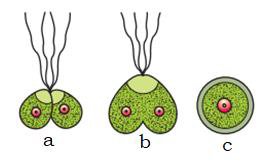
A) a = Fusion of gametes b = Zygote c = New individuals
B) a = Parent organisms b = Fusion of gametes c = Zygote
C) a = Parent Organisms b Fusion of gametes c = Formation of two new individuals
D) a = Zygote b = Fusion of gamete c = New individual
Choose the correct statement-
(I) Fusion of gametes is syngamy
(II) Formation of diploid zygote is result of fertilization
(III) Fusion of gametes is fertilization
A) I and II are correct, III is incorrect
B) II and III are correct, I is incorrect
C) I, II, and III are correct
D) I, III are correct, II is incorrect
Which bird of following show parthenogenesis-
A) Parrot B) Turkey C) Ostrich D) None of these
Parthenogenesis is-
A) Development of new organism from male gamete only without fertilization
B) Development of new organisms from both male and female gametes without fertilization
C) Development of new organisms from unfertilized female gametes
D) All of these
From enlist of organisms, how man shows external fertilization and internal fertilization respectively.
Bryophytes, Algae, Pteridophytes, Gymnosperms, Angiosperm, Fungi, Reptiles, Birds, Mammals, Amphibians, Fishes.
A) 3, 8 B) 5, 6 C) 6, 5 D) None of these
Choose incorrect statement about external fertilization
A) Release a large number of gametes into the surrounding media.
B) The offspring resulted from external fertilization are extremely vulnerable to predators threatening their survival up to adulthood
C) Amphibians of plant kingdom show external fertilization
D) None of these
Choose the correct statement regarding gametes involve in internal fertilization-
A) Egg is formed inside female body is motile structure.
B) In seed plants, the non-motile male gametes are carried to female gametes.
C) There is significant reduction in number of female gametes.
D) Both male and female gametes produced in equal number and both are motile.
Post-fertilization events involves-
A) Formation of zygote B) Embryogenesis
C) Gamete transfer D) Both A and B
Which is universally occurring event during sexual reproduction-
A) Pollination
B) Endosperm formation
C) Zygote formation
D) All of these
Choose the correct statements-
A) In some organisms of fungi and algae, Zygote develop thin wall that is resistant to desiccation and
damage.
B) In haplontic life cycle diploid spore is form after mitosis of zygote that lead to development of new
individuals.
C) Haploid spores are formed after meiosis in zygote that lead to development of new individuals
during haplontic life cycle
D) All of these
Connecting link between one generation to other generation is-
A) Gametes B) Spores C) Zygote D) All of these
Life began as ____ in human beings.
A) Zygote B) Gametes C) Foetus D) None of these
Embryogenesis is-
A) Development of embryo from spore
B) Development of embryo from zygote
C) Development of embryo from gametes
D) None of these
Embryogenesis involves-
A) Meiosis and cell differentiation
B) Mitosis and cell differentiation
C) Cell division (Meiosis & Mitosis) and cell differentiation
D) Cell division (Meiosis & Mitosis) only
Statement-I : Cell divisions increase the number of cells in developing embryo.
Statement-II : Cell differentiation helps groups of cells to undergo certain modification to form specialized tissues and organ to form an organisms.
A) Statement-I and Statement-II are correct
B) Statement-I is correct while Statement-II is incorrect
C) Statement-I is incorrect while Statement-II is correct
D) Statement-I and Statement-II are incorrect.
In oviparous animals-
A) Unfertilized egg laid in safe place is environment
B) Fertilized eggs are covered by hard calcareous shell
C) Unfertilized eggs undergoes for incubation & hatching of new individual
D) A and B both
Choose incorrect about viviparous.
A) Zygote develop into young one inside body of female organism.
B) Chance of survival than viviparous organism is lesser.
C) Change of survival of young ones of human is more than young ones of reptilians.
D) None of these
In flowering plant, zygote is formed inside-
A) Ovule B) Stamen C) Stigma D) Embryo sac present in stamen
After fertilization, which of following floral part does not either and fall off in every plant-
A) Calyx B) Corolla C) Androecium D) Gynoecium
Seed and fruit develop from-
A) Ovary & Ovule respectively
B) Ovule & Ovary respectively
C) Ovary & Ovary respectively
D) Ovule & Ovule respectively
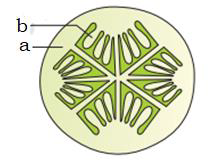
A) a = Seed b = Pericarp B) a = Pericarp b = Seed
C) a = Pericarp b = Pericarp D) a = Seed b = Seed
Which of the following, flowers only once in its life-time?
1) Bamboo species 2) Jackfruit 3) Papaya 4) Mango
Offsets are produced by:
1) Meiotic divisions 2) Mitotic divisions
3) Parthenogenesis 4) Parthenocarpy
Seed formation without fertilisation in flowering plants involves the process of:
1) Sporulation 2) Sporulation
3) Somatic hybridisation 4) Apomixis
In ginger vegetative propagation occurs through:
1) offsets 2) bulbils 3) runner 4) rhizome
Which of the following pairs is not correctly matched?

Is some plants, the female gamete develops into embryo without fertilization. This phenomenon is known as :
(1) Autogamy (2) Parthenocarpy (3) Syngamy (4) Parthenogenesis
A species which was introduced for ornamentation but has become a trouble-some weed in India :
(1) Parthenium hysterophorus (2) Eichhornia crassipes
(3) Prosopis juliflora (4) Trapa spinosa
Vegetative propagule in Agave is termed as :
(1) Rhizome (2) Bulbil (3) Offset (4) Eye
Identify the asexual reproductive structure associated with Penicillium:
1) Zoospores 2) Conidia 3) Gemmules 4) Buds